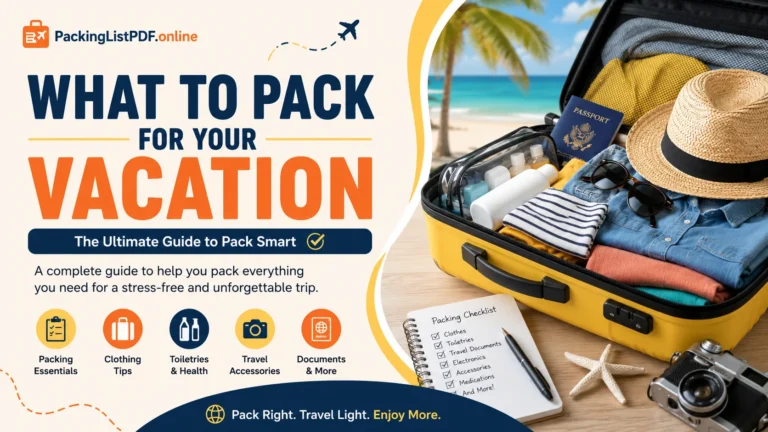
Ultimate Travel Packing List (2026) – The Complete Checklist for Stress-Free Travel
This guide is an Ultimate Travel Packing List, different from those fancy travel blogs. I’m here to make sure you actually get on the plane and have a good time without panicking in a foreign country at 2 AM.
Part 1: Documents and Paperwork
The Passport Reality Check
No passport means no flight. But an “almost expired” passport is just as bad depending on where you’re going.
The Six-Month Club: Most of Asia, the Middle East, and Africa want six months of validity from your return date. Thailand, Indonesia, China, and Turkey are strict about this.
The Three-Month Club: The Schengen Area (most of Europe) only requires three months beyond your planned departure. But watch out for their sneaky 10-year rule.
The “Just Stay” Club: The UK, Canada, Mexico, and Japan just need your passport valid for your entire stay.
My advice: Check your passport the moment you start thinking about a trip. Don’t wait until the week before.
The Documents You Actually Need
Print physical copies of everything. I know we live in a digital world, but airports and border crossings aren’t always reliable for phone signals.
- Your passport – Take a photo of the photo page and keep it in your email. If your passport gets stolen, having that photo makes embassy replacement faster.
- Visa paperwork – Print it. Multiple copies. Don’t rely on showing it from your phone.
- Travel insurance card – A screenshot and physical copy both save your butt if you end up in a hospital.
- Flight confirmations – Download the PDF. Save it offline.
- Hotel reservations – Immigration officers sometimes ask where you’re staying.
- Emergency contacts – Write these down on paper. Include your embassy and someone back home.
- Prescription copies and doctor’s letter – Customs officers can be particular about medications.
- Vaccination records – Some countries still require the yellow fever certificate.
The Three-Copy Rule
Make three copies of your passport photo page, visa, and insurance documents:
- One in your main suitcase
- One in your carry-on
- One with someone trustworthy back home
If your bag or wallet gets stolen, having that copy makes everything faster.
Part 2: Money and Payments
The One-Card Mistake
I’ve seen this happen constantly. People bring one credit card, their bank flags purchases as “suspicious,” freezes the card, and suddenly they can’t pay for anything in a foreign country.
What to do instead:
- Bring at least two credit cards – Use different networks. If one is Visa, make the other Mastercard.
- A debit card for cash – Some banks like Schwab refund ATM fees abroad.
- Local currency – Order from your home bank before leaving for a better rate. Get small bills too—taxis and street vendors can’t break large bills.
- Emergency cash stash – Hide some cash separately from your wallet.
- Digital wallet backup – Load cards into Apple Pay or Google Pay.
- Money belt – Wear it under your clothes, not as a visible accessory.
Cash-Only Realities
Outside major cities, credit cards aren’t always accepted. In smaller towns, local markets, and rural areas, cash is king. Having small bills means you can actually buy things without getting stared at.
Part 3: Clothing
The Rule That Actually Works
Lay out everything you’re planning to bring, then remove a third of it. You won’t miss it.
Why rolling beats folding: Rolling clothes reduces wrinkles and compresses volume by up to 30%. Plus, rolled clothes are easier to organize.
The Core Wardrobe (7+ Days)
- 5 shirts – Four t-shirts in neutral colors plus one button-down for evenings. Merino wool resists odor and dries fast.
- 2-3 pairs of pants – Dark colors hide travel dirt. Swap one for shorts if going somewhere hot.
- 2 long-sleeve layers – Planes are freezing and cool evenings happen everywhere.
- Packable rain jacket – Takes almost no space and saves you from buying an overpriced umbrella.
- Underwear for a week – Quick-dry fabric is amazing. Rinse it in the sink and it’s dry by morning.
- 5-6 pairs of socks – Merino wool again. Worth the extra cost.
- Sleepwear – Or just sleep in a spare t-shirt.
- Swimsuit – Pack it even if you don’t think you’ll swim.
- One pair of comfortable walking shoes – Break them in before the trip.
- One pair of sandals or flip-flops – Useful for showers, beaches, and casual days.
What Not to Pack
White shoes – Destroyed by cobblestones, rain, and dirt.
Expensive jewelry – Attracts pickpockets and isn’t worth the stress.
“Just in case” formal wear – Never gets worn.
More than two pairs of shoes – Two is the absolute maximum.
Anything too heavy to carry up stairs – Many hotels don’t have elevators.
Wear bulky items on the plane – Your winter coat and boots can be worn during the flight to save suitcase space.
Back to Top
Part 4: Tech and Electronics
The Lithium Battery Rule
Lithium batteries and power banks CANNOT go in checked luggage. The FAA requires them in your carry-on. Fire risk is the reason.
Some airlines limit how many power banks you can bring, so check your carrier’s policy.
Essential Tech
- Smartphone – Download offline maps and translation packs before leaving.
- Universal power adapter – Get one rated for 150+ countries with USB ports.
- Power strip with USB ports – One adapter powers multiple devices.
- Power bank – At least 10,000mAh. Must be in carry-on.
- Phone charger and cables – Pack two cables in case one fails.
- Noise-cancelling headphones – For long flights and trains.
- Laptop (only if necessary) – Skip it if you don’t need it for work.
- E-reader – Books are heavy. An e-reader saves space.
- USB drive with document copies – Store in your money belt, not your main bag.
Back to Top
Part 5: Toiletries and Health {#toiletries}
TSA’s Liquid Rule (Still the Same)
The 3-1-1 rule hasn’t changed. Each container must be 3.4 ounces (100 ml) or less, all in one clear quart-sized bag.
Smart alternative: Solid shampoo, conditioner, and soap bars skip the liquid limit entirely. They don’t leak and last longer.
TSA-Compliant Toiletries:
- Toothbrush and toothpaste (3.4 oz tube)
- Shampoo and conditioner (3.4 oz each or solid bars)
- Body wash (3.4 oz or buy at destination)
- Deodorant (solid has no limit)
- Razor (disposable or cartridge)
- Sunscreen (3.4 oz or buy local)
- Makeup (liquids limited, powder has no restriction)
- Moisturizer and lip balm (3.4 oz each)
Prescriptions and First Aid
- All prescription meds in original bottles – Customs may ask for original packaging.
- Pain reliever – Headaches happen, especially with jet lag.
- Cold medicine – New climates increase sickness risk.
- Antihistamine – New environments often have unfamiliar allergens.
- Anti-diarrheal medication – Traveler’s stomach is common enough to plan for.
- Electrolyte packets – Combat dehydration from flying and heat.
- Bandages and blister treatment – New shoes plus lots of walking means blisters.
- Hand sanitizer – Not every restroom stocks soap.
The Medication Warning
Some common medications are restricted or banned in other countries:
- Japan – Adderall and certain decongestants are restricted.
- UAE – Codeine-containing products are restricted.
Research your medications against your destination’s drug laws before flying. “I have a prescription” doesn’t override local law. Bring a doctor’s letter translated into the local language.
Part 6: The Random But Vital Items
These are things nobody thinks about until they’re in a foreign bathroom at 11 PM with no toilet paper.
- Reusable water bottle – Empty through security, fill up after.
- Pen – Needed for customs and immigration forms on the plane.
- Small pack of tissues – Public restrooms abroad often have no toilet paper.
- Sleep mask and earplugs – Hostels, shared dorms, and bright curtains make these essential.
- Large scarf or pashmina – The most multi-purpose item. Use as blanket, pillow, sun protection, and modesty cover.
- Small TSA-approved lock – For hostel lockers and suitcase security.
- Packing cubes – Keeps your bag organized. Or use ziplock bags for cheaper.
- Laundry sheets – Wash clothes in a sink and skip overpacking.
- Offline translation app – Basic phrases matter more than fluency.
- Assorted ziplock bags – Wet swimwear, leaking sunscreen, snacks, trash.
- Rubber doorstop – Extra hotel room security.
Part 7: What NOT to Bring
- Full medicine cabinet – Buy what you need at your destination.
- Full-size toiletries – Travel sizes exist for a reason.
- Expensive watches or jewelry – Targets for theft.
- “Emergency” formal wear – Never gets worn.
- More than two pairs of shoes – The universal rule for a reason.
- Heavy books – An e-reader solves this.
- Laptop for non-work travel – Skip the weight and worry.
- Anything you can’t afford to lose – Passports are necessary. Designer bags are optional.
- A suitcase packed for every day – Plan to do laundry once instead.
Final Pre-Departure Checklist
72 Hours Before:
- Passport valid for your destination’s requirement
- Copies of all documents emailed to yourself
- Bank and credit card companies notified
- Offline maps downloaded
- Travel insurance purchased and saved
- Flight and hotel confirmations saved offline
- Local currency ordered
- Prescriptions filled and in carry-on
Night Before:
- Phone, power bank, headphones fully charged
- Offline translation pack downloaded
- Carry-on ready with passport, wallet, pen, tissues, charging cable
- Comfortable shoes and layers set aside
- Water bottle packed empty
Frequently Asked Questions
Passport & Documents
Q: Does my passport need six months of validity for every country?
A: No. Requirements vary significantly by destination. Over 70 countries (mostly Asia, Middle East, Africa) require six months. Schengen countries need three months plus issuance within 10 years. The UK, Canada, Mexico, and Japan only require validity through your stay. Always check your specific destination.
Q: What if my passport expires while I’m abroad?
A: Contact your country’s embassy immediately. They can issue an emergency passport or travel document. This is why having embassy contact info and passport copies is so important.
Q: Do I really need travel insurance?
A: Yes. Medical emergencies abroad can cost thousands. Travel insurance also covers trip cancellations, lost luggage, and emergency evacuations. The $50-100 cost is nothing compared to a hospital bill in another country.
Q: How many passport copies should I make?
A: Three copies minimum. One in your suitcase, one in your carry-on, and one with someone back home. Also email a digital copy to yourself.
Money & Payments
Q: How much cash should I carry?
A: Enough for 2-3 days of expenses, plus an emergency stash. In many countries, $100-200 in local currency is sufficient. Keep it spread out—some in your wallet, some hidden elsewhere.
Q: Should I exchange money at the airport?
A: Avoid it if possible. Airport exchange rates are terrible. Order from your home bank before leaving or use ATMs at your destination (with a fee-reimbursing card).
Q: What’s the best way to avoid foreign transaction fees?
A: Get a credit card with no foreign transaction fees. Many travel cards offer this. Also notify your bank about your travel dates to avoid frozen cards.
Tech & Electronics
Q: Can I bring a power bank in my carry-on?
A: Yes, but it MUST be in carry-on, never checked luggage. Most airlines allow up to 100Wh (about 27,000mAh). Check your airline’s specific limit.
Q: Do I need a voltage converter too, or just a plug adapter?
A: Most modern electronics (phones, laptops, camera chargers) are dual-voltage (110-240V). Just a plug adapter is fine. For hair dryers or older devices, check the voltage rating first.
Q: Will my phone work internationally?
A: Check with your carrier about international plans. Or buy a local SIM card at your destination—it’s usually cheaper. Just ensure your phone is unlocked.
Health & Medications
Q: Are my prescription medications legal in other countries?
A: Not always. Japan restricts Adderall and some decongestants. The UAE restricts codeine products. Research your specific medications against your destination’s laws. Carry a doctor’s letter and original bottles.
Q: Can I pack medications in my checked luggage?
A: No. Always pack all medications in your carry-on. You need access to them, and checked bags can get lost.
Q: Do I need vaccinations for international travel?
A: Some countries require specific vaccinations (like yellow fever). Check CDC or WHO recommendations for your destination. Start the process early—some vaccines require multiple doses over weeks.
Clothing & Packing
Q: How many outfits do I actually need for a two-week trip?
A: Pack for one week and plan to do laundry once. A week’s worth of versatile clothing is 5 shirts, 2 pants, 7 underwear, and 5 socks. Mix and match.
Q: Should I bring a checked bag or carry-on only?
A: Carry-on only if you can manage it. It saves baggage fees, avoids lost luggage, and speeds up airport navigation. Most people can travel with a carry-on for trips up to two weeks.
Q: What fabrics are best for travel?
A: Merino wool, bamboo, and synthetic blends. They resist odor, dry fast, and pack small. Avoid cotton—it takes forever to dry and wrinkles easily.
Airline Rules & Security
Q: What’s the TSA liquid rule in 2026?
A: Same as always. 3.4 ounces (100ml) per container, all fitting in one clear quart-sized bag per passenger. This applies to all liquids, gels, and aerosols.
Q: Can I bring food through security?
A: Solid food is usually fine. Liquids, gels, and spreads over 3.4 oz are not allowed through security. Empty your water bottle before security and refill after.
Q: What electronics need to be removed at security?
A: Laptops and larger electronics must be removed from bags for screening. Some airports also require tablets to be removed. Check the rules at your departure airport.
Miscellaneous
Q: Should I learn the local language?
A: Basic phrases go a long way. Learn “hello,” “thank you,” “please,” “where is the bathroom,” and “how much.” Locals appreciate the effort.
Q: What do I do if my luggage gets lost?
A: Report it immediately to the airline before leaving the airport. Get a reference number. Your travel insurance may cover essentials you need to buy. Having a change of clothes in your carry-on is lifesaving.
Q: Is it safe to drink tap water abroad?
A: Depends on the country. Research before you go. If unsure, stick to bottled water. A reusable bottle with built-in filter can be a great investment.
Q: How early should I arrive at the airport?
A: International flights: 3 hours. Domestic: 2 hours. This gives time for check-in, security, and any unexpected delays. More time is always better.
Final Thoughts
Travel isn’t about packing perfectly. It’s about having a good time without unnecessary stress. Most problems can be solved with money and flexibility. But passport issues, visa problems, and medication restrictions deserve attention before you leave.
This advice comes from personal mistakes and watching other travelers struggle. Use it, adapt it to your trip, and don’t stress too much. Travel is supposed to be fun. Even when things go wrong, they usually make the best stories.
Safe travels! 🌍✈️
You May Like:
The Ultimate Beach Vacation Packing List PDF (2026 Edition)
Business Trip Packing List: (2026)