Ultimate Ski Trip Packing List [2026 Printable]
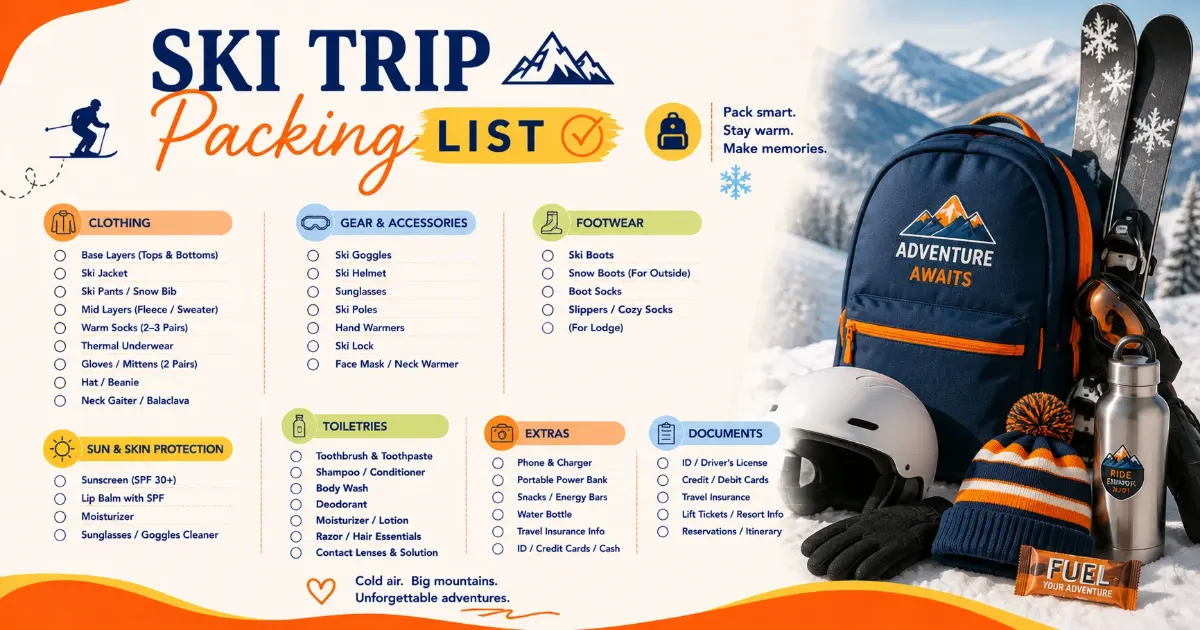
Between freezing temperatures, bulky gear, and changing mountain weather, it’s surprisingly easy to forget something important. From thermal base layers to après-ski outfits, this is the complete ski vacation packing list, plus a free printable checklist.
Skip ahead — get the printable PDF
The full checklist below, formatted for printing or your fridge.
On this page
Custom Ski Trip Checklist Builder
Every item below is pre-checked based on our full guide. Uncheck what doesn’t apply, add your own, then print your personalized list.
Planning a ski vacation sounds exciting — until it’s time to pack. Between freezing temperatures, bulky winter gear, changing mountain weather, and long days on the slopes, it’s surprisingly easy to forget something important. Nothing ruins a ski trip faster than cold hands, wet socks, or realizing you forgot your goggles halfway up the mountain.
1. Quick Ski Trip Packing Checklist
🧥 Ski Clothing Essentials
5 items
Thermal base layers | ||
Waterproof ski jacket | ||
Waterproof ski pants | ||
Mid-layer fleece or insulated jacket | ||
Ski socks | ||
Gloves or mittens | ||
Neck gaiter or buff | ||
Beanie |
Full 3-layer breakdown in section 3.
🎿 Ski Gear
5 items
Skis and poles | or rental confirmation | |
Ski boots | ||
Helmet | ||
Goggles | ||
Ski backpack + ski lock |
Rent vs. bring guide in section 5.
🎫 Travel Essentials
5 items
Passport or ID | ||
Lift tickets | ||
Travel insurance | ||
Portable charger + phone charger | ||
Snacks and water bottle |
Full document list in section 10.
🧴 Cold Weather Protection
5 items
SPF 50+ sunscreen | ||
Lip balm with SPF | ||
Hand warmers | ||
Moisturizer | ||
Sunglasses |
🌨️ Sunscreen is one of the most forgotten ski trip essentials.
2. Why Packing Properly for a Ski Trip Is So Important
Ski vacations are different from regular winter trips. You spend hours outdoors in freezing temperatures, snow, strong winds, changing weather, and high-altitude conditions. At the same time, skiing is physically intense — your body heats up quickly while moving, then cools down fast on chairlifts or during breaks.
The goal is simple
Stay warm, stay dry, and stay comfortable all day — smart layering and waterproof gear are what actually make that happen.
3. The 3-Layer Ski Clothing System
Instead of wearing one heavy jacket, skiers use three lightweight layers that work together.
1️⃣ Base Layer — Moisture Control
sits against skin
Thermal tops | 2–3 | |
Thermal leggings | 2–3 | |
Ski socks | 3–4 pairs |
Best materials: merino wool, polyester blends, synthetic performance fabrics.
Avoid cotton completely
Cotton traps moisture and makes you colder — the opposite of what a base layer is supposed to do.
2️⃣ Mid Layer — Insulation
traps body heat
Fleece jacket | ||
Lightweight down jacket | ||
Synthetic insulated jacket | ||
Sherpa pullover |
For most ski trips, one or two mid layers are enough.
3️⃣ Outer Layer — Weather Protection
shields from snow & wind
Waterproof ski jacket | ||
Waterproof ski pants |
Look for: breathable fabric, taped seams, a snow skirt, helmet-compatible hood, waterproof zippers.
4. Essential Ski Accessories
Small accessories can completely change your ski experience — these are the items many beginners forget.
🧤 Gloves or Mittens
3 items
Waterproof gloves or mittens | ||
Glove liners | ||
An extra backup pair |
Mittens are usually warmer than gloves in very cold weather.
Ski goggles: choose lenses by weather
Goggles protect against snow glare, wind, UV rays, and low visibility. Dark lenses work best for sunny days, lighter lenses for cloudy or snowy weather.
Helmet
Essential for safety. Many resorts offer helmet rentals, but frequent skiers often prefer bringing their own for comfort and hygiene.
Neck gaiter or buff
Protects your face, neck, and chin from freezing wind — one of the most useful items on this entire list.
5. Ski Equipment: Rent or Bring?
Beginners & Casual Skiers
Renting usually makes more sense: airline baggage fees are expensive, rental shops offer modern equipment, and carrying gear through airports is a hassle.
Frequent Skiers
If you ski multiple times a year, bringing your own equipment can improve comfort and performance.
6. Ski Trip Packing List for Families
Traveling with kids on a ski holiday requires extra planning — children get cold faster, lose gloves constantly, and often need multiple clothing changes.
👨👩👧 Family Ski Essentials — Pack Extra
5 items
Gloves | ||
Socks | ||
Thermal layers | ||
Snacks | ||
Hand warmers |
Wet clothing is common when skiing with kids — pack accordingly.
Smart family packing tips
Bring ID wristbands, portable snacks, evening entertainment, extra waterproof layers, and small backpacks for kids. Protein bars, fruit snacks, and candy can be lifesavers during long ski days.
Practical, not official guidance
This guide reflects general travel-planning experience, not legal, medical, or immigration advice. Passport, visa, and medication rules change and vary by country — always confirm current requirements with your destination’s embassy, your airline, and your doctor before you travel.
7. Après-Ski Clothing Essentials
You won’t stay in ski gear all evening — after the slopes close, you’ll want comfortable clothing for restaurants, hot tubs, village walks, and relaxing at the lodge.
👖 What to Pack for Après-Ski
8 items
Warm sweater or hoodie | ||
Jeans or casual pants | ||
Leggings or joggers | ||
Pajamas | ||
Snow boots with grip | ||
Slippers for hotel rooms | ||
Swimsuit for hot tubs + flip flops | ||
Casual dinner outfit |
A hot tub soak after a ski day is one of the underrated perks of the trip.
8. Toiletries, Skincare & Health
Cold mountain air is extremely drying, and snow reflects UV rays — increasing sun exposure even on cloudy days.
🧴 Ski Skincare Essentials
5 items
SPF 50+ sunscreen | ||
Lip balm with SPF | ||
Rich moisturizer | ||
Hand cream | ||
Hydrating face serum |
🌨️ Sunburn at high altitude is extremely common, even in winter.
🩹 First Aid Essentials
7 items
Pain relievers | ||
Blister bandages | ||
KT tape | ||
Muscle cream | ||
Electrolyte tablets | ||
Cold medicine | ||
Antacids |
Blisters and sore muscles are extremely common during ski vacations.
9. What to Pack in Your Ski Backpack
🎒 Ski Day Backpack Checklist
10 items
Lift pass | ||
Wallet + phone | ||
Portable charger | ||
Water bottle + snacks | ||
Sunscreen + lip balm | ||
Spare gloves | ||
Small first aid kit |
🥜 Energy bars and nuts work well for long ski days.
10. Important Documents & What NOT to Pack
📄 Essential Documents
8 items
Passport or ID | ||
Flight confirmations | ||
Hotel reservations | ||
Lift tickets + ski school bookings | ||
Travel insurance documents | ||
Credit cards | ||
Emergency contacts |
🩹 Travel insurance matters here — mountain injuries can get expensive fast.
SKIP 01
Cotton base layers
Traps moisture and makes you colder.
Instead: merino wool or synthetic fabrics.
SKIP 02
Heavy casual clothing
Bulky and rarely worn on a ski trip.
Instead: lightweight layering pieces.
SKIP 03
Multiple ski jackets
One good waterproof shell is enough.
Instead: layer underneath instead.
SKIP 04
Brand-new ski boots
Unbroken-in boots cause blisters fast.
Instead: break them in before the trip.
SKIP 05
Oversized toiletries
Wastes valuable luggage space.
Instead: travel-size everything.
SKIP 06
Too many sweaters
Most people wear far fewer outfits than expected.
Instead: 2–3 versatile options.
11. Smart Packing Tips, Hacks & FAQs
Wear bulky items on the plane
Wear your ski jacket, snow boots, hoodie, and beanie on travel days to save real luggage space.
Use packing cubes
Separate ski clothing, casual outfits, accessories, and dirty laundry into their own cubes.
Fill ski boots with small items
Use the empty space inside your boots for gloves, socks, thermal layers, and goggles.
Bring a portable charger
Cold weather drains phone batteries much faster than normal — this is one of the most commonly forgotten items.
The travel checklists readers trust most