How to Pack a Hospital Bag: The Simple 3-Bag Method
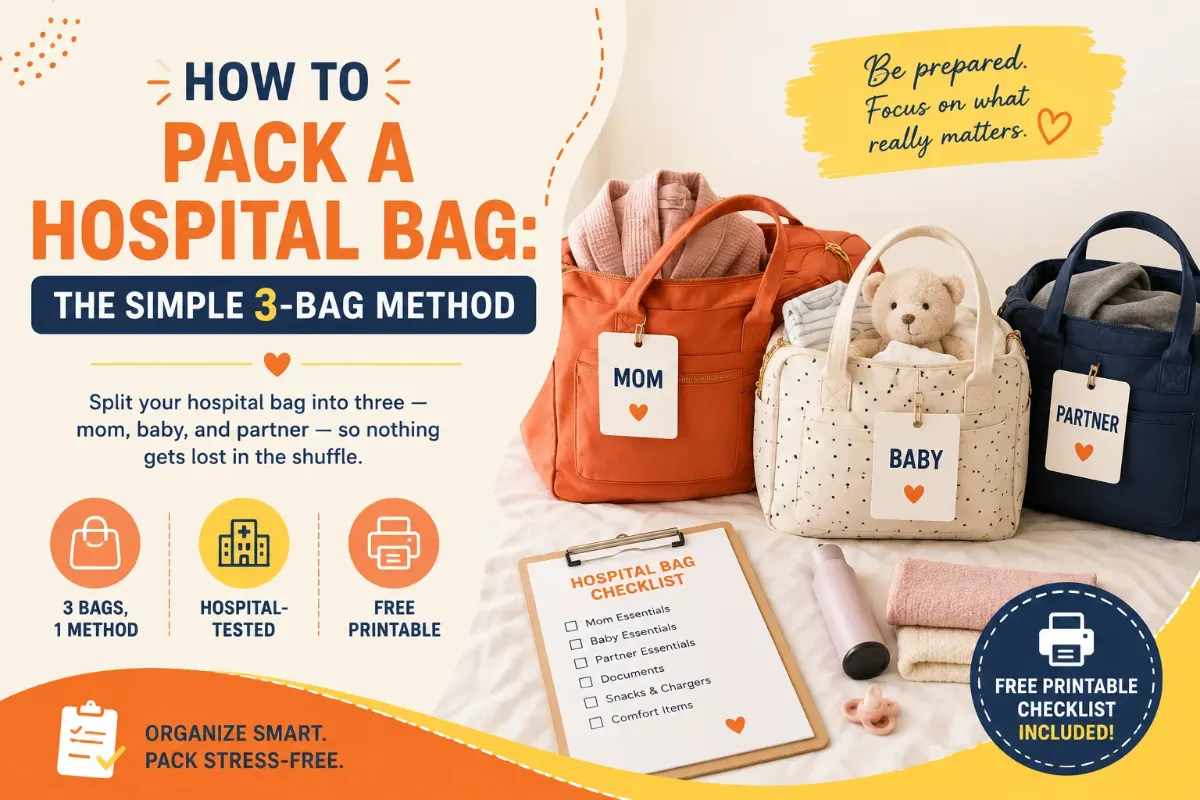
Split your hospital bag into three — mom, baby, and partner — so nothing gets lost in the shuffle.
The easiest way to learn how to pack a hospital bag is to split it into three separate bags — one for mom, one for baby, one for your partner — instead of piling everything into a single suitcase. This keeps things easy to find during labor, when nobody wants to dig through a giant bag looking for lip balm. Below, we’ll walk through exactly how to organize, pack, and pack smart, so your bag actually works for you at the hospital.
Quick Answer:
Pack three separate bags instead of one: a mom bag with paperwork and comfort items on top, a small baby bag (most hospitals supply diapers and wipes), and a light partner bag with a charger and snacks. Label each one so it’s easy to grab fast.
How to Pack for Mom: What Goes in Your Bag
Your bag should be packed with easy-access comfort items on top and paperwork in an outer pocket, since you’ll want your ID and insurance card the moment you arrive. Pack heavier or less-urgent items like your going-home outfit toward the bottom.
ID, insurance card, and hospital paperwork in an outer pocket | |
Comfortable robe and slippers packed near the top | |
Toiletry bag with toothbrush, lip balm, and hair ties | |
Phone charger, clipped or taped to the bag so it’s never left behind | |
Nursing bra and going-home outfit, packed toward the bottom |
Want the complete item-by-item list with quantities? Our Hospital Bag Checklist for Moms covers every essential in full detail.
How to Pack for Baby: Keep It Small and Simple
Baby’s bag should stay light, since most hospitals provide diapers, wipes, and swaddle blankets during your stay. Focus your packing on the items the hospital won’t supply.
Going-home outfit in two sizes (newborn and 0–3 month) | |
A soft blanket from home for photos and comfort | |
Hat and mittens for extra warmth | |
Car seat, already installed and checked before your due date |
For everything you’ll need once you’re home, our Newborn Essentials Checklist covers the full nursery and beyond.
How to Pack for Your Partner or Support Person
Your partner’s bag should be small and separate from yours, so they’re never digging through your things to find their own charger or snack. A short list is all it takes.
A change of clothes and a comfortable pillow | |
Phone charger and headphones | |
Snacks and cash or a card for vending machines | |
Toiletries and any daily medications |
Smart Packing Techniques That Actually Help During Labor
The way you pack matters as much as what you pack, since a well-organized bag saves stress when you’re focused on labor, not logistics. A few small habits make a real difference.
Pack by Category, Not by Bag
Group items by type — toiletries together, clothes together, chargers together — using packing cubes or labeled pouches, so anyone grabbing your bag can find things quickly, even if it’s not you doing the digging.
Keep Essentials in an Outer Pocket
Store your ID, insurance card, and phone charger in an easy-access outer pocket rather than buried inside, since these are the items you’ll need the fastest at check-in.
Label Each Bag Clearly
A simple luggage tag or piece of tape labeled “Mom,” “Baby,” and “Partner” prevents mix-ups, especially if your support person is the one carrying bags in during active labor.
Hospital Bag Packing: What Goes Where
Item | Which Bag |
|---|---|
ID, insurance card, paperwork | Mom’s bag, outer pocket |
Going-home outfit (baby) | Baby’s bag |
Snacks and phone charger | Partner’s bag |
Car seat | Kept in the car, not the hospital bag |
Nursing bra and pads | Mom’s bag, near the bottom |
Common Mistakes When Packing a Hospital Bag
Most hospital bag frustration comes down to how things were packed, not what was packed. Here’s what to avoid.
Packing everything into one giant bag.
Fix: use the 3-bag method so mom, baby, and partner items never get tangled together.
Burying your ID and paperwork at the bottom.
Fix:keep essentials in an outer pocket you can reach without unzipping the whole bag.
Not labeling bags before you’re at the hospital.
Fix: tag each bag by name ahead of time so your support person can grab the right one fast.
Waiting until labor starts to pack.
Fix: pack by week 36 — see our guide on when to pack your hospital bag for the full timeline.
Frequently Asked Questions
What is the easiest way to pack a hospital bag?
The easiest way is to use three separate bags — one for mom, one for baby, one for your partner — so each person can quickly find their own items without digging through everything else.
What should be packed first in a hospital bag?
Pack your ID, insurance card, and hospital paperwork first, and keep them in an outer pocket so they’re the easiest items to reach at check-in.
Should I use packing cubes for a hospital bag?
Yes, packing cubes or labeled pouches make it much easier to find items by category, like toiletries or clothes, without unpacking the entire bag.
What goes in the baby’s hospital bag?
Baby’s bag should include a going-home outfit in two sizes, a blanket, a hat, and mittens — most hospitals provide diapers and wipes during your stay.
Does my partner need their own hospital bag?
Yes. A small separate bag with a change of clothes, snacks, and a phone charger means your partner won’t need to leave to grab forgotten items.
When should I finish packing my hospital bag?
Most doctors recommend having your hospital bag fully packed by week 36 of pregnancy, since labor can start earlier than your due date.
Sources: General guidance in this article reflects common recommendations from organizations such as the American College of Obstetricians and Gynecologists (ACOG). Always confirm specific hospital-provided items with your own delivery hospital, since supplies can vary by location.
Ready to build your complete list? Download our free Hospital Bag Checklist, or browse our Newborn Essentials Checklist for everything you’ll need once you’re home.