Packing List for Japan: What to Pack for Every Season and Trip
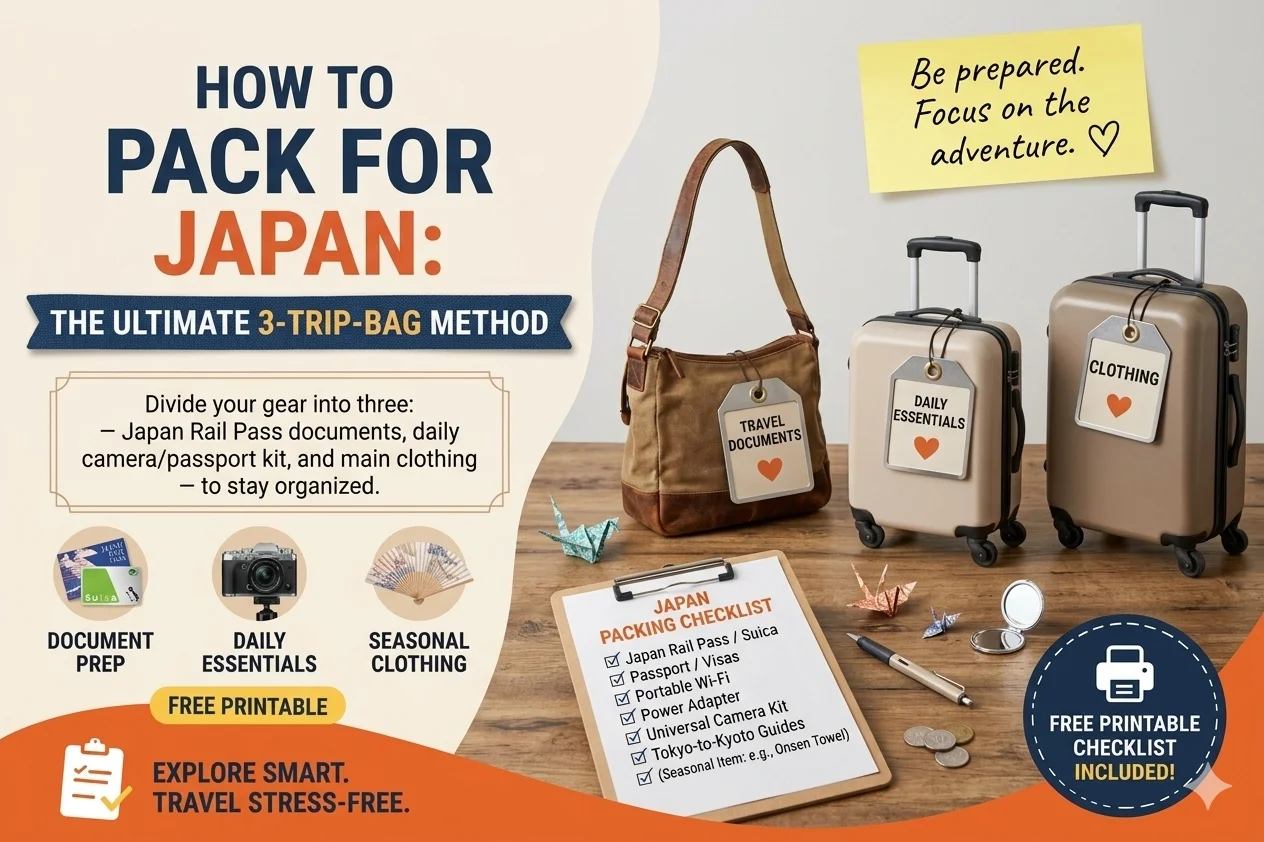
The short answer: a good packing list for Japan covers layered, modest clothing, comfortable walking shoes, a universal travel adapter, and a Suica or Pasmo transit card — and it changes a lot depending on which season you’re visiting in. Japan runs from snowy winters in the north to humid, sticky summers in the south, so a “one list fits all trips” approach usually leaves people either overpacked or underprepared. This Japan travel packing list breaks everything down by category, by season, and by trip length, so you can build a bag that actually matches your itinerary.
Skip ahead — get the printable PDF
The full checklist below, formatted for printing or your fridge.
On this page
Custom Japan Checklist Builder
Every item below is pre-checked based on our full guide. Uncheck what doesn’t apply, add your own, then print your personalized list.
What to Pack for Japan: The Complete Checklist
The core of any Japan packing checklist comes down to four categories: clothing, toiletries, electronics, and documents. Get these right and everything else — souvenirs, snacks, extra layers — is easy to adjust once you land.
Clothing
5–7 tops, mixed short and long sleeve for layering | |
2–3 bottoms (trousers, jeans, or a skirt with leggings) | |
1 light jacket or cardigan, even in summer (for air-conditioned trains and shops) | |
Comfortable walking shoes you’ve already broken in | |
1 pair of easy slip-on shoes or sandals (you’ll remove shoes often — temples, some restaurants, ryokan stays) | |
Socks without holes (seriously — you’ll be showing them off more than usual) | |
Sleepwear | |
Modest swimwear if visiting an onsen or beach town |
Toiletries
Travel-size toothpaste, toothbrush, and deodorant (Japanese deodorant is mild by Western standards) | |
Sunscreen (SPF 50 is common and easy to buy locally, but bring some for day one) | |
Any prescription medication in original packaging with a copy of the prescription | |
Basic first-aid items: plasters, pain relief, motion sickness tablets for trains and ferries | |
Hand sanitizer and a small pack of tissues (public restrooms don’t always stock paper towels) |
Electronics
Universal travel adapter (Japan uses Type A/B plugs, 100V) | |
Portable charger / power bank | |
Phone with an eSIM or a plan for renting a pocket Wi-Fi at the airport | |
Camera, if you use one separately from your phone |
Documents
Passport (valid well beyond your travel dates) | |
Printed and digital copies of flight and accommodation bookings | |
Travel insurance details | |
A physical credit or debit card that works internationally, plus some cash — many smaller shops and shrines are cash-only |
What to Pack for Japan by Season
Japan’s four seasons are dramatically different, so the honest answer to “what should I pack” depends entirely on when you’re going. Use the table below to see how your list shifts from spring cherry blossoms to winter snow.
Season | Typical Weather | Key Items to Pack |
|---|---|---|
Spring (Mar–May) | Mild, 10–20°C, some rain | Light layers, a packable rain jacket, comfortable shoes for cherry blossom walks |
Summer (Jun–Aug) | Hot and humid, 25–35°C, rainy season in June | Breathable fabrics, a compact umbrella, a hand fan, extra deodorant, reusable water bottle |
Autumn (Sep–Nov) | Mild and dry, cooling toward November | Layers similar to spring, a warmer jacket for late November, comfortable shoes for leaf-viewing walks |
Winter (Dec–Feb) | Cold, 0–10°C, snow in the north | Insulated coat, thermal layers, gloves, scarf, waterproof boots |
If you’re travelling in the shoulder months, pack for the cooler end of the range — Japanese buildings and trains are well heated or air-conditioned, but the walk between them can catch you off guard.
What to Wear in Japan as a Tourist
Japan doesn’t have a strict dress code, but modest, neat clothing helps you blend in and stay comfortable at temples and shrines. Loud logos and very casual gym wear stand out more here than in most Western cities, and locals tend to dress a notch more put-together for everyday outings.
Temple and shrine etiquette clothing
Cover your shoulders and knees when visiting temples, and choose shoes that slip on and off easily since you’ll often remove them at the entrance. Avoid anything overly revealing, and keep a light scarf or cardigan on hand for cooler indoor spaces.
Shoes to pack for Japan
Pack shoes built for walking, not for style — you’ll easily cover 15,000+ steps a day between train stations, shrine grounds, and city blocks. Slip-on sneakers or loafers are ideal since you’ll take shoes off far more often than at home.
Japan Travel Essentials: Electronics, Adapters & Transportation
A working power adapter and a loaded Suica or Pasmo card solve most of the small daily friction points in Japan. Japan runs on 100V power with Type A/B plugs, so most North American devices work with just a plug adapter, no voltage converter needed.
Suica card travel essentials
A Suica or Pasmo IC card is the single most useful thing in your Japan travel essentials checklist — it works on nearly every train, subway, and bus, and even at convenience stores and vending machines. You can add one to your phone wallet before you land or buy a physical card at the airport.
Japan train travel essentials
Beyond your IC card, keep a lightweight daypack for train days, a portable charger, and noise-cancelling earbuds or headphones for longer rides. If you’re planning multiple long-distance trips, look into a Japan Rail Pass before you leave home, since it’s often cheaper to buy in advance.
Japan Packing List by Trip Length
The length of your trip changes your clothing quantity more than anything else — Japan has laundromats and coin laundry in most cities, so you rarely need to pack for every single day.
7 days: 5–6 outfits, 1 laundry stop optional
10 days: 6–7 outfits, plan on one laundry day
2 weeks: 7–8 outfits and a planned laundry day around the midpoint, rather than packing for all 14 days
Families travelling together should split documents and chargers across bags rather than one central spot, so a single lost or delayed suitcase doesn’t strand everyone without essentials.
SKIP 01
Overpacking shoes.
Two well-chosen pairs beat four — you’ll be taking them on and off constantly, and extra pairs just add weight.
SKIP 02
Assuming cards work everywhere.
Many smaller restaurants, shrines, and rural shops are still cash-only. Carry yen, especially outside major cities.
SKIP 03
Forgetting a portable Wi-Fi plan.
Free public Wi-Fi is limited. Sort an eSIM or pocket Wi-Fi before you land, not after.
SKIP 04
Packing for one season only.
Shoulder-season trips can swing 10°C+ in a week. Check the table above and bring at least one flexible layer.
Japan Packing List FAQs
Staying in hostels or capsule hotels in Japan? See our hostel packing list for padlock, sleep and shared-bathroom essentials.
Sources
Seasonal and weather guidance referenced from the Japan Meteorological Agency (jma.go.jp) and general travel planning information from the Japan National Tourism Organization (japan.travel). Always check current conditions and entry requirements before you travel, since seasonal patterns and travel rules can change year to year.