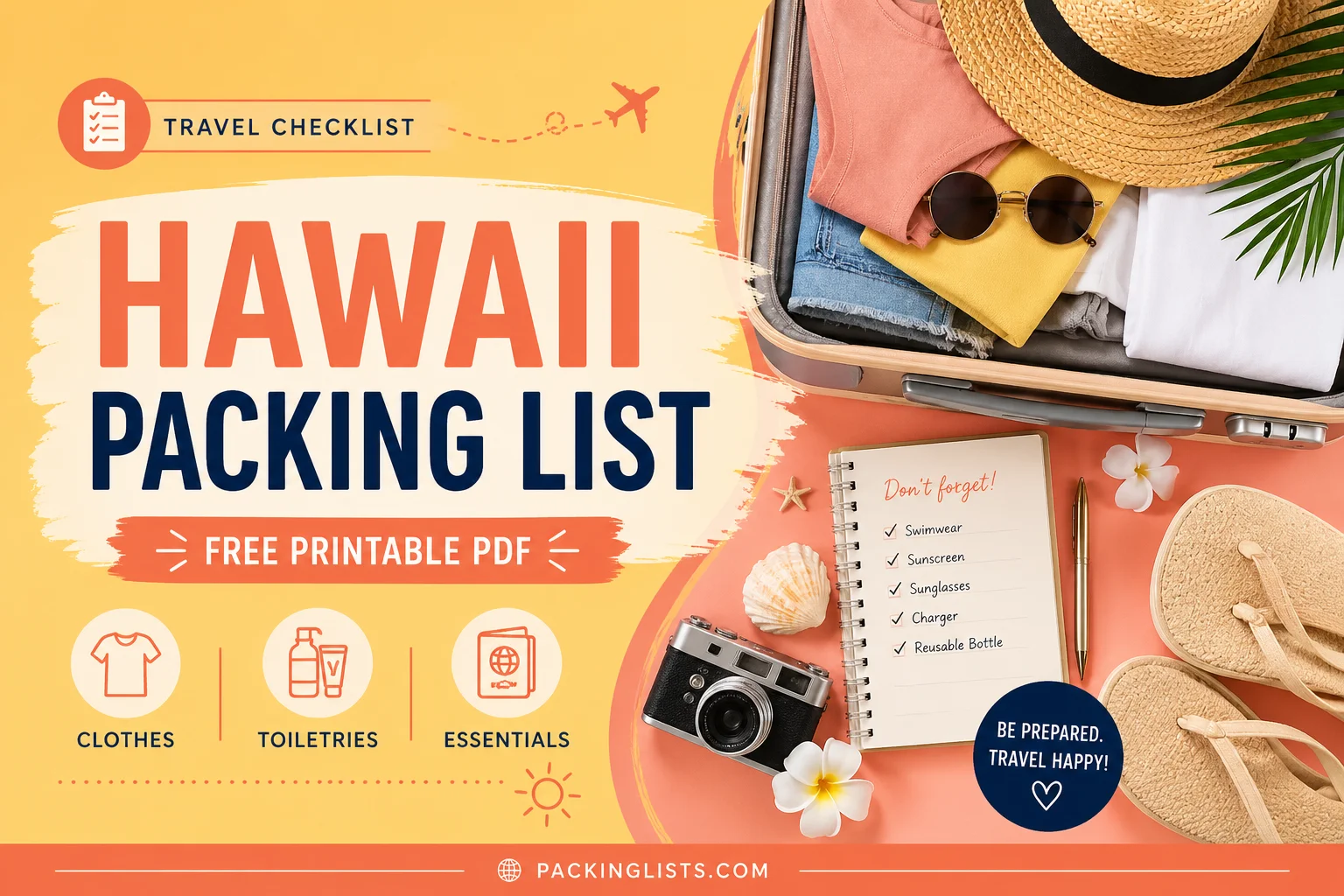
Ultimate Hawaii Packing List: The ONLY Guide You’ll Need [2026 Printable]
Fact: Hawaii welcomes nearly 10 million visitors each year, with the average tourist staying 8-10 days and visiting 2-3 islands .
Here is a fact: People who visit Hawaii for the time usually spend around one hundred and fifty dollars on things they forgot to bring. They buy these things at hotel gift shops which’re really expensive. For example sunscreen costs three times more in Waikiki than it does on the mainland.
This list has the things you really need. I did not include things that you might need. I only included the essentials that people who have been, to the islands say you should bring.
📋 Quick Look: The 60-Second Hawaii Essentials
| Category | Absolute Must-Haves | Nice to Have |
| Clothing | 5-7 lightweight outfits, 2-3 swimsuits, cover-up, light jacket | Hawaiian print shirt, nicer outfit for dinners |
| Footwear | Flip flops/sandals, comfortable walking shoes, water shoes | Hiking boots (if hiking) |
| Beach Gear | Reef-safe sunscreen (SPF 50+), beach bag, waterproof phone pouch | Snorkel gear, beach mat, cooler bag |
| Protection | Sunscreen, lip balm with SPF, sunglasses, wide-brim hat | Rash guard, after-sun lotion |
| Tech | Phone + charger, power bank, camera/GoPro | Portable speaker, travel adapter |
Keep reading for the complete detailed list with pro tips from Hawaii veterans!
🎯 Before You Pack: 5 Critical Questions
1. Which islands are you visiting?
The Hawaiian Islands are incredibly diverse:
- Oahu → Busy, urban Waikiki, historic sites, great food scene
- Maui → Romantic, luxury resorts, Road to Hana, whale watching (Dec-May)
- Kauai → Lush, outdoor adventures, Nā Pali Coast, hiking
- Big Island (Hawaii) → Volcanoes National Park, diverse climates (snow on Mauna Kea!)
- Lanai/Molokai → Remote, luxury, untouched
Your packing changes DRAMATICALLY by island. Kauai needs rain gear. Big Island needs layers for volcano altitude.
2. What’s your activity level?
- Beach bum → Mostly swimwear, cover-ups, sandals
- Hiker/adventurer → Hiking boots, activewear, rain jacket
- Sightseer → Comfortable walking shoes, layers
- Mix of everything → Pack for ALL activities
3. How many days?
A 7-day trip needs different planning than 10+ days. This guide covers both.
4. Are you staying in one place or island-hopping?
Island-hopping means carrying luggage on small planes. Pack LIGHTER.
5. What season?
Hawaii is warm year-round, but:
- Summer (May-Oct) → Hotter, drier, bigger waves on south shores
- Winter (Nov-Apr) → Cooler, rainier, bigger waves on north shores, whale watching
🌡️ Hawaii Weather & Climate Guide
Year-Round Basics
- Average temperatures: 75-85°F (24-29°C) day, 65-75°F (18-24°C) night
- Water temperature: 74-80°F (23-27°C) year-round
- Rain: Brief showers possible daily, especially on windward (east) sides
By Island
| Island | Climate Notes | Packing Priority |
| Oahu | Warm, some rain in winter | Standard Hawaii wear |
| Maui | Dry in Kihei/Wailea, wet in Hana | Layers for Haleakalā sunrise (COLD!) |
| Kauai | WET—one of wettest places on Earth | RAIN GEAR essential |
| Big Island | EVERY climate—desert to snow | Layers for volcano (40°F at summit!) |
💡 Pro Tip: Pack layers! A light jacket or hoodie is essential for evenings, air-conditioned restaurants, and higher elevations .
Clothing: The 5‑4‑3‑2‑1 Rule for Your Hawaii Packing List
Overpacking clothes is the #1 mistake. You will wear the same few pieces repeatedly. For a 7‑10 day trip, this Hawaii packing list recommends:
- 5 pairs of quick‑dry underwear
- 4 tops (tanks, tees, or blouses)
- 3 bottoms (two shorts, one pant or legging)
- 2 swimsuits (one on, one drying)
- 1 light jacket or hoodie
Add one rash guard (UPF 50+), one casual dress or Aloha shirt for dinners, and a sarong (doubles as towel, scarf, or cover‑up). Quick‑dry fabrics (linen, bamboo, polyester blends) handle humidity better than cotton.
For Her, For Him, and Families
Hawaii packing list for women (7 days):
- 4 tops + 2 sundresses
- 2 shorts + 1 linen pant
- 2 swimsuits + 1 cover‑up
- 1 light cardigan
- Hair ties (humidity is real)
Hawaii packing list for men (7 days):
- 4 breathable shirts (2 tees, 2 button‑downs)
- 3 shorts
- 2 swim trunks
- 1 Aloha shirt (acceptable anywhere for dinner)
- 1 light jacket
Hawaii packing list for families:
- 2 swimsuits per child
- UPF 50+ rash guards for everyone
- 2x more clothes than you expect (kids get sandy and wet)
- Swim diapers, water shoes, wet wipes
- Small first‑aid kit (bandages, sting relief)
Footwear Strategy: Three Pairs Max
Most tourists overpack shoes. Your Hawaii packing list needs only three pairs:
Water shoes – essential for rocky beaches, lava rock, and tide pools.
Flip‑flops (slippahs) – for beach, pool, and casual walks.
Comfortable walking shoes or trail runners – broken in before you go.
Beach Gear That Belongs on Your Hawaii Packing List
Must‑pack items:
- Reef‑safe sunscreen SPF 50+
- Rash guard (UPF 50+)
- Waterproof phone case with lanyard
- Dry bag or wet bag
- Microfiber or Turkish towel
- Reusable insulated water bottle
Nice to have but not essential:
- Snorkel gear (rentals are widely available)
- Cooler bag
- Beach umbrella
Island‑Hopping Specifics: What Changes by Island
| Island | What to Add to Your Hawaii Packing List |
|---|---|
| Maui | Warm layers for Haleakalā sunrise (40°F); motion‑sickness meds for Road to Hana |
| Kauaʻi | Rain jacket (it is one of the wettest places on Earth) |
| Big Island | Fleece and gloves for Mauna Kea (30°F); rain gear for Hilo side |
| Oʻahu | North Shore in winter needs a hoodie (it can be 20°F cooler than Waikīkī) |
Seasonal Packing: Summer vs. Winter in Hawaii
Summer (May – October): hotter, drier, south shore waves. Pack extra sun protection (UV index 11+), more swimwear, and a hydration pack.
Winter (November – April): cooler evenings, more rain, north shore waves (watch from shore). Add a light rain jacket, a fleece, and binoculars for whale watching.
Carry‑On‑Only Hawaii Packing List Hacks
Inter‑island flights have smaller overhead bins. A checked bag adds cost and risk. Use these hacks:
- Packing cubes – compress clothes and keep you organized.
- Wear your bulkiest items – jacket, hiking shoes, and hoodie on the plane.
- Decant toiletries – TSA 3‑1‑1 rule applies. Buy full‑size sunscreen after you land.
Tech, Documents, and First Aid
Tech: phone + 10‑foot charger, power bank (10,000 mAh+), offline maps (cell service disappears), camera/GoPro with underwater case.
Documents: ID/passport, flight confirmations, hotel reservations, car rental confirmation (digital + paper copies). Cash for fruit stands and small vendors.
First‑aid kit for your Hawaii packing list:
- Pain reliever (sunburns and sore muscles)
- Antihistamines, antacids, motion‑sickness medicine
- Sting relief spray (jellyfish are common)
- Waterproof bandages, moleskin, and tweezers
What NOT to Pack for Hawaii
Leave these at home:
- Your stress (you are on vacation)
- Sunscreen with oxybenzone or octinoxate (illegal)
- Formal wear, heels, or suits (you will not use them)
- Expensive jewelry (sand and salt do not care)
- More than 3 pairs of shoes (three is plenty)
- Heavy cotton towels (they never fully dry)
- Full‑size toiletries (travel sizes only)
- Glass bottles (banned on many beaches)
- Pineapples or fresh produce (will be confiscated at agricultural inspection)
FAQ – People Also Ask
Q:1 What should I pack for a 7‑day Hawaii trip?
Pack 4–5 tops, 3 bottoms, 2 swimsuits, a rash guard, reef‑safe sunscreen SPF 50+, flip‑flops, water shoes, a light jacket, and a reusable water bottle. Use quick‑dry fabrics.
Q:2 Do I really need water shoes in Hawaii?
Yes. Almost every beach has sharp lava rock, hidden coral, or sea urchins. Mesh water shoes protect your feet and dry fast.
Q:3 Is regular sunscreen banned in Hawaii?
Only sunscreens with oxybenzone or octinoxate are banned from sale. Bring only mineral‑based reef‑safe sunscreen.
Q:4 What is the best carry‑on packing strategy for Hawaii?
Use packing cubes, wear your bulkiest items on the plane, decant toiletries into travel sizes, and buy full‑size sunscreen after you land.
Q:5 How many swimsuits do I need for Hawaii?
Two is enough – one on, one drying. Rotate daily.
Q:6 Can I wear jeans in Hawaii?
You can, but you probably will not want to. Denim is heavy and dries slowly. Pack lightweight pants instead.
Q:7 What should I pack for hiking in Hawaii?
Trail runners, moisture‑wicking shirt, lightweight pants, rain jacket, 2–3 liters of water, snacks, sunscreen, bug spray, offline map, and a headlamp.
Q:8 What do I need for island‑hopping in Hawaii?
Stick to carry‑on luggage. Keep your ID, reef‑safe sunscreen, water shoes, and a change of clothes in your personal item.
Q:9 What should I pack for Hawaii in December?
Pack a light rain jacket, a fleece or hoodie, layers for evenings, and binoculars for whale watching. North shores have big waves – watch from shore.
Q:10 Is there a printable Hawaii packing list PDF?
Yes. Download from here – the free PDF includes checkboxes, island notes, a daily beach bag checklist, and a first‑aid kit. No email required.
Related Packing Lists
Planning more adventures? Check out these helpful packing lists to stay organized for every type of trip:
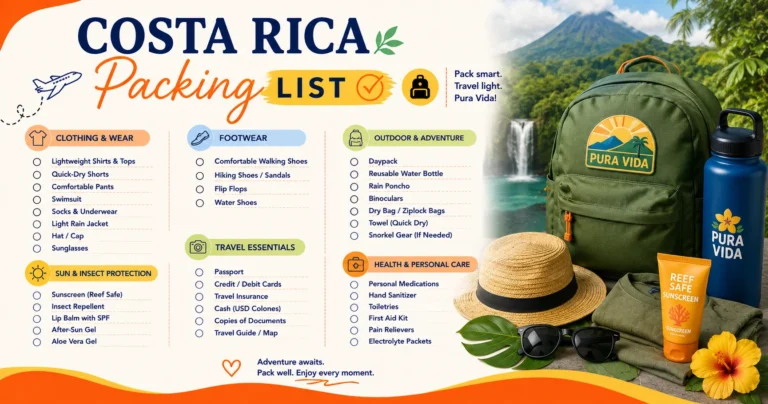
- Costa Rica Packing List – Heading to tropical beaches, rainforests, and volcanoes? This complete checklist covers everything you need for a comfortable Costa Rica vacation.
- Family Vacation Packing List – Traveling with kids? Use this family-friendly packing guide to make sure everyone has the essentials for a smooth and stress-free trip.
- Road Trip Packing List – Whether you’re exploring Hawaii by car or planning another scenic drive, this road trip checklist helps you pack smart for the journey.
One Comment