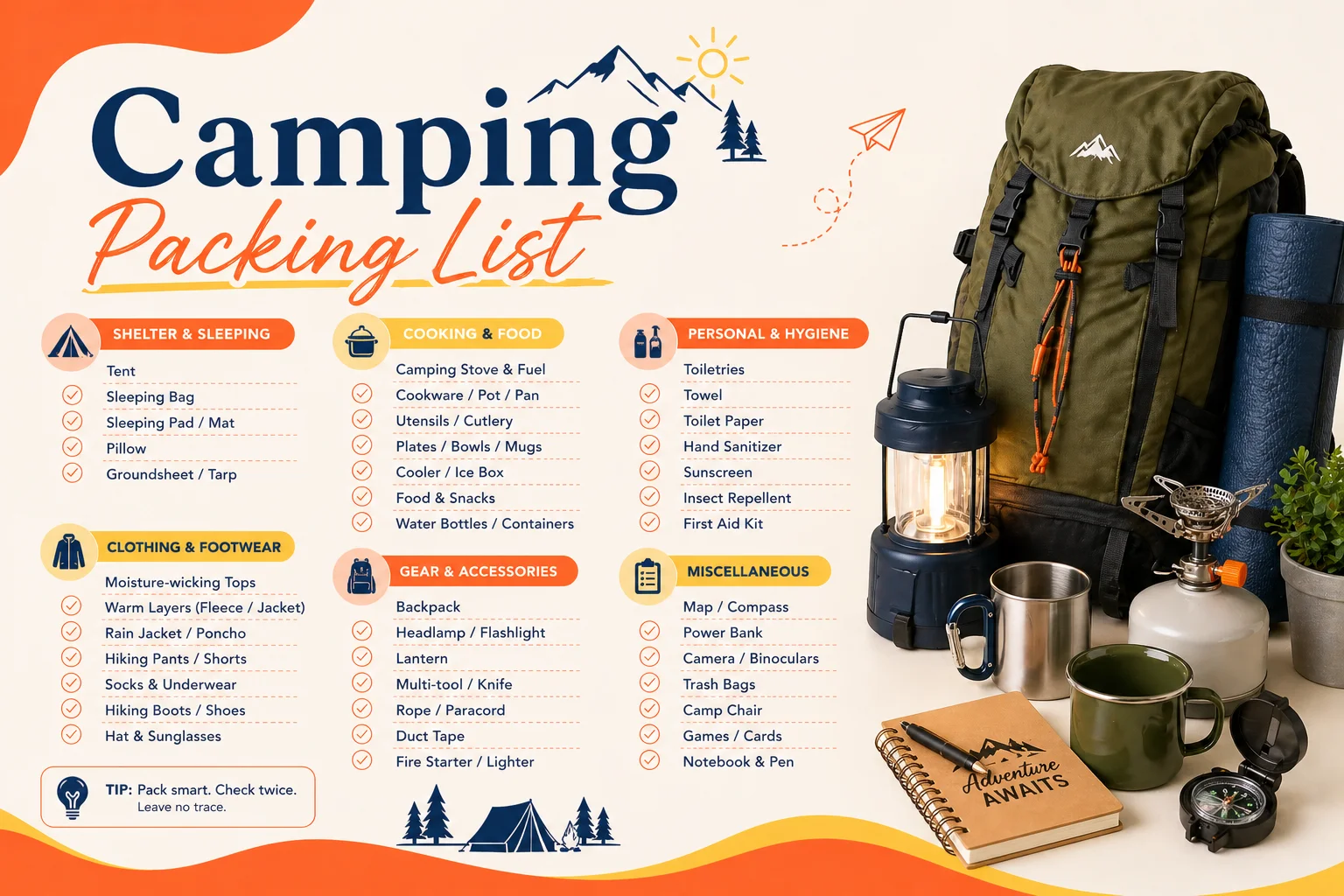
Camping Packing List 2026: Free Printable PDF Guide
A good camping packing list separates a great trip from a miserable one. Here is a fact: nearly 40 million Americans go camping each year. Another fact: first‑time campers forget an average of eight essential items on their first trip. That leads to uncomfortable nights and unnecessary stress.
📥 Download from here – free printable PDF with checkboxes for every item. No email required.
👉Also Check Our : Family Vacation Packing List
The 60‑Second Camping Essentials
Here is what you absolutely need. Everything else is optional.
- Shelter and sleep: Tent, sleeping bag, sleeping pad, pillow
- Kitchen and food: Camp stove, fuel, cookware, cooler, water containers
- Clothing: Base layers, fleece, rain jacket, hiking pants, extra socks
- Lighting: Headlamp, lantern, extra batteries
- Safety: First aid kit, fire starter, multi‑tool, map
- Hygiene: Biodegradable soap, toothbrush, toilet paper, towel
Keep reading for the complete camping packing list. That way, you won’t be the person shivering at 2 AM.
Before You Pack: 4 Critical Questions
Answer these first. Otherwise, you will bring the wrong gear.
1. What type of camping?
Car camping (drive‑up) lets you pack heavier. Backpacking means every ounce matters. RV camping offers more space. Primitive camping (no facilities) requires you to pack everything.
2. What is the weather forecast?
Mountain weather changes fast. Therefore, check night versus day temperatures, rain chances, wind conditions, and UV index. Sunburn at altitude is real.
3. How many nights?
A weekend trip needs different planning than a week‑long expedition. Food quantity, fuel, and clothing all scale up.
4. What facilities are available?
Is there drinking water? Do they have bathrooms? Are fire rings provided? Knowing this helps you pack only what you need.
Shelter and Sleep System
Your shelter determines whether you wake up refreshed or miserable.
Shelter items to pack:
- Tent (practice setting it up at home)
- Tent stakes (bring extras – they bend or disappear)
- Guy lines (pre‑attach at home)
- Ground tarp or footprint (protects the tent floor)
- Small broom or dustpan (keeps the tent clean)
Sleeping gear essentials:
- Sleeping bag rated for expected temperatures plus 10° colder
- Sleeping pad (insulation from cold ground is critical – R‑value of 2‑3 for summer, 4+ for cooler nights)
- Camp pillow or stuff sack filled with clothes
- Sleeping bag liner (adds warmth and keeps the bag clean)
- Extra blanket for cold nights (wool is best)
Sleep tip: Change into clean, dry clothes for sleeping. Never sleep in the clothes you wore all day – moisture equals cold.
Kitchen and Cooking
Cooking equipment to pack:
- Camp stove (1‑2 burners – test it before your trip)
- Fuel canisters (enough for all meals plus extra)
- Cookware set (pots and pans with lids – non‑stick helps)
- Eating utensils (plate, bowl, spork, cup)
- Lighter and waterproof matches (bring multiple methods)
- Biodegradable camp soap (small dropper bottle)
- Scrubber, sponge, and microfiber dish towel
Food storage:
- Cooler (rotomolded like Yeti or RTIC holds ice for days)
- Ice packs or frozen water bottles
- Dry bag or bear canister (required in bear country – check park rules)
- Ziploc bags in all sizes (freezer weight is best)
Sample meal ideas:
- Breakfast: oatmeal, granola, pre‑cracked eggs in a bottle, pancakes
- Lunch: tortillas (they don’t squish), hard cheese, cured meats, peanut butter
- Dinner: backpacking meals, foil packet dinners, one‑pot pasta
- Snacks: trail mix, granola bars, fresh fruit, chocolate
- Drinks: coffee, tea, hot cocoa, electrolyte mixes
- S’mores supplies – graham crackers, chocolate, marshmallows (non‑negotiable)
Clothing: The Layering System
Camping requires adapting to changing weather. The key is layers.
Base layer (next to skin):
- Moisture‑wicking shirts (merino wool or synthetic – NO COTTON)
- Hiking pants or shorts (convertible pants are 2‑in‑1)
- Hiking socks (wool or synthetic blend – 3‑4 pairs)
- Quick‑dry underwear (3‑4 pairs)
Mid layer (insulation):
- Fleece jacket (warmth when active)
- Puffy jacket (down or synthetic – for camp and evenings)
Outer layer (protection):
- Rain jacket (waterproof and breathable – pit zips help)
- Rain pants (optional but nice for wet trails)
Camp clothes:
- Sleep clothes (clean, dry, warm – never sleep in day clothes)
- Camp shoes (Crocs, flip‑flops, or light sneakers – give feet a break)
- Warm hat or beanie
- Lightweight fleece gloves (if cold)
- Sun hat with strap
- Swimsuit (if swimming)
The cotton rule: “Cotton kills” is real in the outdoors. It holds moisture, takes forever to dry, and chills you dangerously. Leave jeans and cotton tees at home.
Footwear
What to pack:
- Hiking boots or shoes (broken in before your trip)
- Camp shoes (Crocs are surprisingly great)
- Water shoes (if lots of water activities)
Sock strategy: one pair for hiking each day, one clean pair for camp and sleep. Rotate and air them out daily.
Lighting and Navigation
Lighting essentials:
- Headlamp (hands‑free – essential – red light mode preserves night vision)
- Lantern (lights up camp and cooking area – collapsible saves space)
- Extra batteries (store in a waterproof container)
- String lights (optional – nice for camp ambiance)
Navigation:
- Map of the area (waterproof or in a ziplock)
- Compass (know how to use it before you go)
- Phone with offline maps (download before you lose service)
- Satellite communicator for remote areas (Garmin inReach or Spot device)
Safety and First Aid
First aid kit contents:
- Cuts and scrapes: bandages, gauze, medical tape, antiseptic wipes, antibiotic ointment
- Pain and fever: ibuprofen, acetaminophen
- Allergies: antihistamines (Benadryl)
- Blister care: moleskin, blister bandages, leukotape
- Bites and stings: after‑bite treatment, sting relief
- Stomach issues: antacids, anti‑diarrhea medication
- Tools: tweezers (for splinters and ticks), small scissors
Emergency and safety items:
- Fire starter (lighter, waterproof matches, ferro rod – practice before your trip)
- Multi‑tool or knife (keep it accessible)
- Emergency whistle (three blasts = distress signal)
- Emergency blanket (reflects body heat – weighs nothing)
- Written emergency contact info (include park ranger number)
- Satellite messenger for remote areas (rent if you do not own)
Sun protection:
- Sunscreen SPF 30+ (reef‑safe if near water)
- Sunglasses
- Sun hat with strap
Hygiene and Toiletries
Personal hygiene items:
- Toothbrush and travel‑size toothpaste
- Biodegradable soap (small dropper bottle)
- Hand sanitizer (multiple small bottles)
- Toilet paper (remove the tube and store in a ziplock – bring more than you think)
- Wet wipes (biodegradable only)
- Feminine products (enough plus extras – seal used ones in a ziplock)
- Travel‑size deodorant
- Bug spray (DEET or picaridin – apply after sunscreen)
- Lip balm with SPF (multiple sticks)
If no bathroom facilities:
- Portable toilet or wag bags
- Toilet trowel for catholes (6‑8 inches deep, 200 feet from water)
- Hand sanitizer
Leave No Trace: Always pack out toilet paper and hygiene products. Burying does not work – animals will dig it up.
What NOT to Pack for Camping
Leave these at home:
- Cotton clothing (holds moisture and chills you)
- Glass containers (breakable, dangerous, heavy)
- Scented products (attracts bears and wildlife)
- Brand‑new boots (blister city – break them in at home)
- Expensive jewelry (unnecessary and easy to lose)
- Full‑size toiletries (travel sizes only)
- Heavy cast iron (unless car camping AND you are committed)
- Firewood from home (can transport invasive pests – buy local)
- Drone (banned in most national parks)
- Fireworks (banned on public lands, dangerous)
Final Pre‑Camping Checklist
Before you leave home:
- Tent is set up and tested (not just in the bag)
- Stove is tested and fuel is full
- Sleeping bag and pad are packed
- First aid kit is complete
- Headlamp has fresh batteries
- Food is packed by meal in labeled bags
- Cooler has ice packs or frozen water bottles
- Maps and navigation are downloaded
- Camping reservation confirmation is printed or saved
You are ready. Now go enjoy the stars. Forget the stress – you have this camping packing list.
📥 Download from here – free printable PDF with checkboxes for every item, food planning worksheet, and emergency contact card.
FAQ – People Also Ask
Q: What should I not forget for camping?
Do not forget sleeping pads (insulation from cold ground is critical), headlamp, first aid kit, fire starter, and toilet paper. These are the most commonly forgotten essentials.
Q: How do I keep food safe from bears?
Use bear canisters where required. Otherwise, hang food properly – 10 feet up and 4 feet from the tree trunk. Never keep food in your tent.
Q: What is the best food for camping?
One‑pot meals, pre‑prepped ingredients, and foods that do not need refrigeration. Tortillas work better than bread (they do not squish). Hard cheese and cured meats are good choices.
Q: How much water should I bring camping?
Bring one gallon per person per day for drinking and cooking. Bring more if the weather is hot or you plan to hike. If water sources are available, bring a filter.
Q: Do I really need a sleeping pad?
Yes. Even in summer, the ground draws heat from your body. A sleeping pad provides insulation and cushion. An R‑value of 2‑3 works for summer; 4+ is better for cooler nights.
Q: What is the #1 mistake new campers make?
Not testing gear at home before the trip. Set up your tent, test your stove, and break in your boots BEFORE you are in the woods.
Q: How do I stay warm at night while camping?
Change into dry sleep clothes. Eat before bed – digestion creates heat. Use a properly rated sleeping bag and pad. Wear a hat.
Q: Can I bring my dog camping?
Yes, but check campground rules first. Pack dog food, a bowl, a leash, waste bags, a bed, and a pet first aid kit.
Q: What if it rains while camping?
Bring tarps for extra shelter. Keep gear in dry bags. Have indoor activities planned. Embrace it – some of the best camping memories happen in the rain.
Q: Is there a printable camping packing list PDF?
Yes. Download from here – the free PDF includes checkboxes for over 150 items, a food planning worksheet, and a Leave No Trace reminder card. No email required.
You Might Also Like
Last updated: May 2026 • ~1,550 words
2 Comments