The Kindergarten Packing List
Most kindergarten parents get emotional on the day. Not just the kids.. Lots of them forget something important during the first week.
This guide’s simple kindergarten packing list is different. No extra stuff. Just the real things from teachers who have done this time.
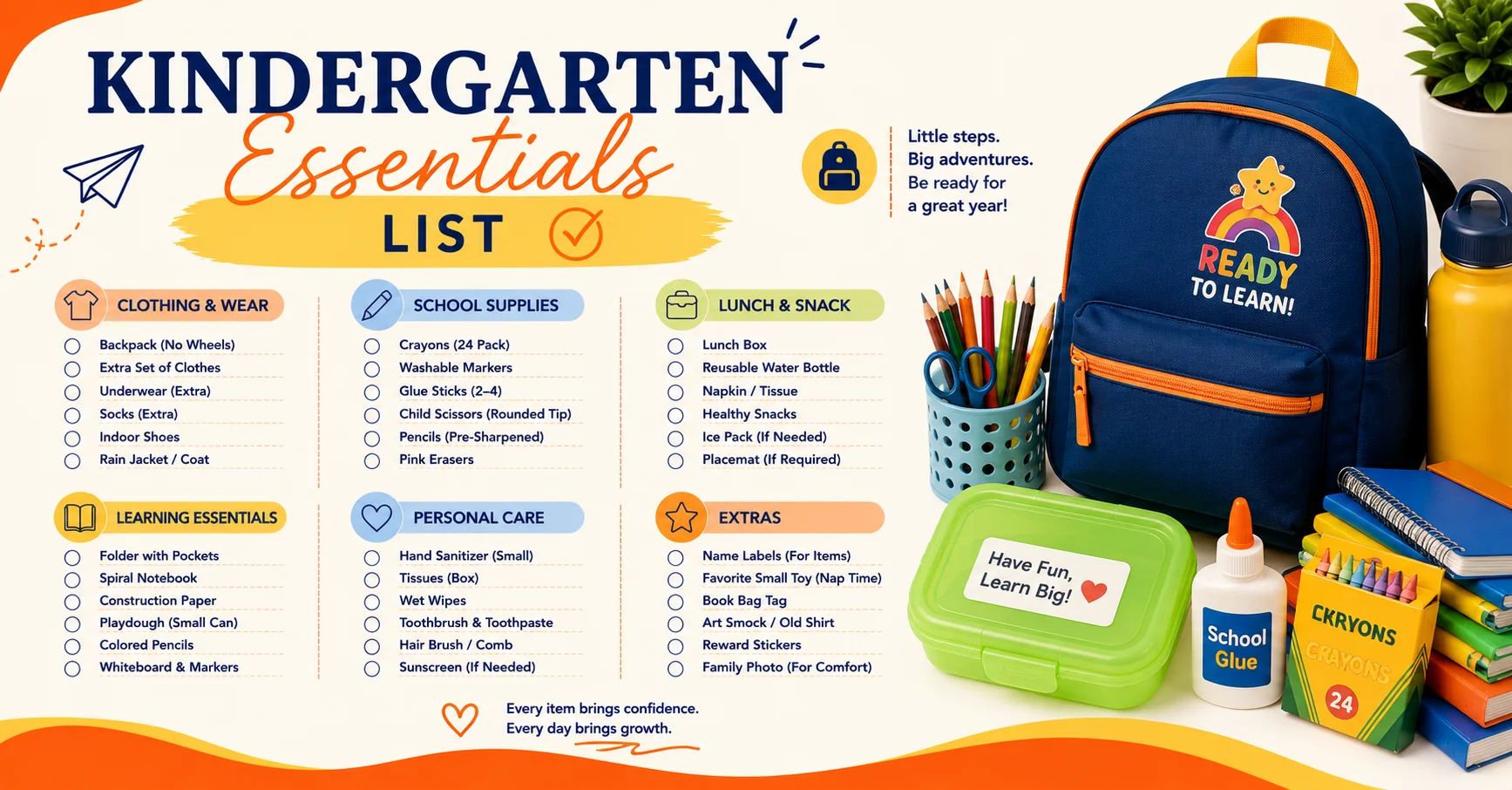
This is the complete Kindergarten packing list for 2026.
Part 1: Before You Buy Anything
The One Most Important Rule
Kindergarten is not preschool.
In preschool someone helps your child with some things.
In kindergarten your child needs to do things alone. One teacher has kids. They can’t help everyone.
So your job is not just buying supplies. Your job is teaching your child to be independent.
What to Practice at Home (2 Weeks Before School)
Do these things every day for a minutes:
- Opening lunch boxes. Send what they can open alone
- Putting on shoes. Velcro. No laces.
- Using the bathroom alone. Wiping, flushing, washing hands
- Putting on a coat. Lay it on the floor down arms in flip over head
- Writing their name. Doesn’t need to be perfect. Just trying matters.
That’s it. If they can do these five things they are ready.
Part 2: School Supplies (Keep It Simple)
The Absolute Must-Haves
- Backpack. Big enough for a folder. No wheels.
- Rest mat. For nap time first semester. Label with name.
- Headphones. WIRED, not Bluetooth. Teachers like wired.
- Pencils. 12 Ticonderoga brand. Cheap ones break.
- Crayons. 8 Or 16 count. Not 64. Too many is overwhelming.
- Markers. Washable. Crayola. No fancy stuff.
- Scissors. Tip. Fiskars brand.
- Glue sticks. 6 To 8. Purple ones that dry clear.
- Folders. 2 Or 3 plastic ones. One for “take home.”
- Play-doh. 4 Cans. Teachers love this.
- Tissues. 2 Boxes. Runny noses everywhere.
- Wipes. 1 Canister Clorox wipes. Teachers are happy.
One Rule About Supplies
Buy what the teacher asks for. Not more. Not less.
Teachers have systems. When you buy the “or “cuter” version it often doesn’t fit. Trust them.
Part 3: Clothes (The “Accident” Rule)
Everyday Clothes
- Pants or shorts. 6 Or 7 pairs. Elastic waist only. No buttons, no belts.
- Shirts. 7 Or 8 sleeve. Dark colors hide paint and dirt.
- Underwear. 10 To 14 pairs. Label every one. Lost and found is full of underwear.
- Socks. 10 To 14 pairs. Buy all the color. No matching required.
*. Hoodie. 2 Or 3. NO drawstrings. They get caught on playground equipment.
- Shoes. Velcro. NO laces until grade.
The Emergency Change of Clothes
Put this in a Ziploc bag. Keep it in the backpack all year.
- 1 shirt
- 1 pair pants
- 2 pairs underwear
- 2 pairs socks
Replace it when seasons change. Teachers will thank you.
Part 4: Lunch and Snacks
The Golden Rule of Lunch
Your child must be able to open everything
Test this at home. If they struggle with something change it.
Lunch Gear
- Lunchbox. Insulated. Easy to open.
- Ice pack. Small and flat. Freeze overnight.
- Bento box. Everything in one container. No separate lids to lose.
- Water bottle. Leak proof. Flip straw is easier than screw cap.
What to Pack
choices:
- Sandwich cut into triangles
- Grapes, berries, apple slices
- Cheese stick
- Yogurt tube
- Crackers, goldfish, pretzels
- Applesauce pouch
Avoid:
- sandwich
- Whole apple
- Hard carrots
- Yogurt cup with peel-off lid
- Nuts
Snacks
Send:
- Granola bar
- Fruit pouch
- bag of pretzels
- Banana
Part 5: Rest Time (Yes a Thing)
Most kindergarten classes have 20-30 minutes of rest time semester.
What You Need
- Rest mat. Rolls up. Fits in cubby. Label with name.
- blanket. Fleece is best. Easy to wash.
- Lovey. Only if your child can put it alone.
Ask the Teacher First
Some schools provide rest mats. Some don’t. Ask before buying.
Part 6: Paperwork (Boring But Important)
Get These Done Before First Day
- Immunization records
- exam form
- Emergency contacts
- Pickup list
Smart Extra: The “About My Child” Letter
Write a note to the teacher. 5 Sentences:
“My child loves dinosaurs. They struggle with opening containers. Hugs help when they are upset. No food allergies. We speak English at home. Thank you for teaching them.”
Teachers love this. They don’t have time to ask every parent.
Part 7: Extras That Save You
Keep in Backpack All Year
- Change of clothes
- pack of wipes
- Small pack of tissues
- Small hand sanitizer
- Band-aids
Send to Classroom First Week
- Clorox wipes
- Tissues
- Hand sanitizer
- Ziploc bags
Part 8: What NOT to Bring
Don’t Bring Why
- Toys Lost or stolen
- Tablets or phones Not needed. Will be lost.
- Lace-up shoes Can’t tie them alone
- Buttons or belts Bathroom is hard enough
- clothes Paint, glue, mud, food
- Your anxiety Kids feel it. Cry in the car after.
Part 9: The Night Before (Simple Checklist)
- Backpack packed
- Lunch in fridge
- Water bottle filled
- Rest mat labeled and rolled
- Clothes laid out
- Forms signed
- Alarm set
- Camera charged
- Tissues in YOUR bag
- Plan for yourself, after drop-off
Part 10: The Honest Truth
Your child doesn’t need to read before kindergarten.
Your child doesn’t need to write sentences.
But your child DOES need to:
- Use the bathroom alone
- Open their lunch
- Put on their own coat and shoes
- Ask for help using words
You’ve got this. Your kindergartner has got this.
Now go take that first day photo.. Yes crying is allowed.
FAQ Section
Q1. What should a kindergarten packing list include?
A kindergarten packing list should include essentials like a backpack, lunchbox, water bottle, spare clothes, pencils, crayons, glue sticks, scissors, and rest-time items like a mat and blanket. Keep it simple and label everything clearly.
Q2. How many clothes should I pack for kindergarten?
Most children need 6–8 shirts, 6–7 pants or shorts, 10–14 pairs of underwear and socks, plus one emergency change of clothes stored in the backpack.
Q3. What is the most important item for kindergarten?
The most important items are a backpack, lunchbox, water bottle, and an emergency change of clothes. These ensure your child is prepared for daily school needs and accidents.
Q4. Should I label my child’s kindergarten supplies?
Yes. Labeling all items—especially clothes, lunchboxes, and backpacks—helps prevent loss since classrooms often have many similar items.
Q5. What kind of lunch should I pack for kindergarten?
Pack easy-to-eat foods your child can open independently, such as sandwiches, fruit slices, yogurt tubes, crackers, and cheese sticks. Avoid messy or hard-to-open items.
Q6. Do kindergarteners need rest time supplies?
Yes, many schools include rest or nap time, especially in early kindergarten. A roll-up mat, small blanket, and optional lovey are commonly required.
Q7. What should NOT be packed for kindergarten?
Avoid toys, expensive items, lace-up shoes, complicated clothing (buttons/belts), and anything your child cannot manage independently.
Q8. How can I prepare my child before kindergarten starts?
Practice daily skills like opening lunchboxes, using the bathroom independently, putting on shoes, wearing a backpack, and recognizing their name.
More Helpful Packing Lists
Getting ready for kindergarten is just one step in your child’s journey. If you’re planning other family activities or school-related trips, these packing lists can help:
- Family Vacation Packing List – Stay organized for your next family getaway with a complete travel checklist.
- Road Trip Packing List – Keep kids comfortable and entertained on long car journeys with this handy packing guide.
These printable checklists can save time, reduce stress, and help you avoid forgetting important items.